Join our Zoom event in partnership with Microsoft & receive up to RM10,000 in Caction and Microsoft Power BI usage credits. T&Cs apply.
Reduce overdue maintenance, unnecessary repeat visits, technician downtime and costly breakdowns with real-time operational visibility.
Caction connects assets, preventive maintenance, breakdowns, technicians, service reports and operational data in one platform — helping elevator and escalator service companies improve visibility and productivity, respond faster and protect service margins as they scale.
 Hyundai Elevator
 KONE
KONE
 Access Elevator
Caction helped to reduce 70-80% of breakdown cases, saving resources and time. This allows us to deliver the highest quality services to our clients.
We can easily monitor and optimise our technicians’ work schedule to minimise work backlog. It’s been convenient to report to clients whether our technicians are already at the site or on the way. We also reduced time wastage because it’s so simple to retrieve data of the project.

The system has helped us increase our efficiency in managing the team. We are able to ensure the safety of the workers and also for attendance purposes.

The system features are good and beneficial in a lot of different ways for our company.
Caction helped us improve our supervision in sales and the performance of our managers as well. The system is great for work planning and payment follow up. Also, we have more than 40 sites to control and the system has made it convenient and easy to manage all of that.
Caction is used by elevator-industry organisations including Hyundai Elevator Malaysia, CE Elevator, IBEE and PT Sakura Elevator Indonesia Corp.
Maintenance Completion
Stay ahead of scheduled maintenance
Breakdown & Callback Response
Respond faster to urgent calls
Inspection Visibility
Track findings and outstanding defects
Certificate Tracking
Keep expiry dates visible
An elevator’s service lifecycle starts long before the first preventive maintenance visit. From installation and commissioning through years of maintenance, inspections, breakdowns, callbacks and eventual modernization, every stage creates information that can affect the next stage.
The challenge is keeping that information connected.
Capture asset, installation and handover records from day one.
Record inspection findings and defect status against the asset.
Track maintenance, breakdowns and callbacks as they happen.
Manage mantrap incidents as structured, trackable service jobs.
Keep certificate expiry and modernization needs visible.
Installation and commissioning involve more than getting an elevator or escalator operational. Asset details, installation records, testing results, documents and handover information all need to be captured and kept accessible for future servicing. Caction helps teams organise these records alongside the relevant asset, giving service teams the context they need once the equipment moves into its maintenance lifecycle.
With a complete record from installation onwards, teams can start the maintenance lifecycle with better visibility and less reliance on scattered paperwork.
An elevator inspection can involve many components and findings. The challenge isn’t only scheduling the inspection — it’s maintaining visibility over the condition of the asset and the defects discovered during it. Caction helps structure inspection workflows so technicians record findings consistently, attach evidence and update the status of corrective work.
Instead of findings disappearing into individual reports, the information stays connected to the asset’s service history — making it easier to answer what was inspected, which defects were repaired, which remain outstanding and when corrective work was completed. Clearer records help the business demonstrate what was inspected, what work was performed and what information was available at the time.
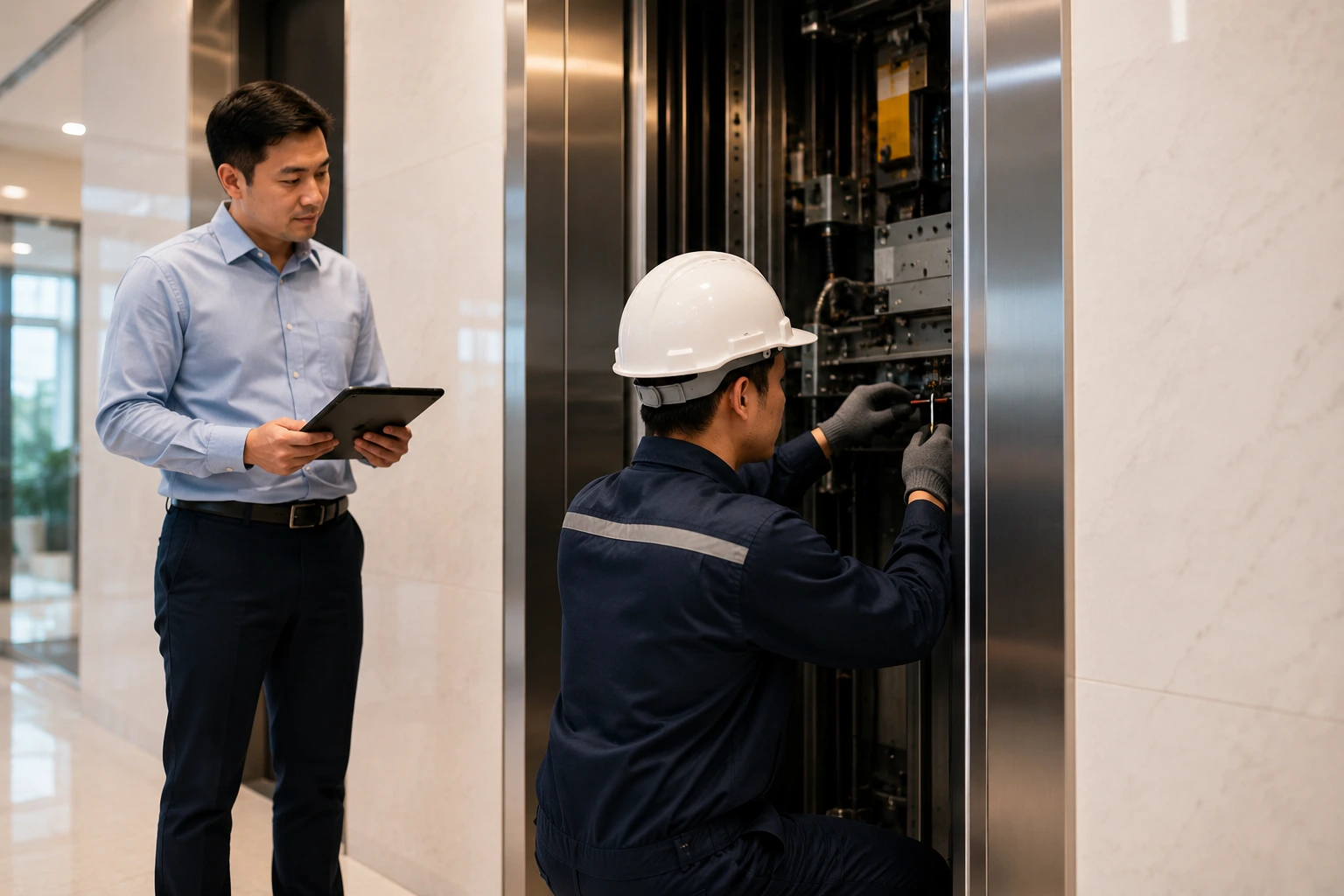
Breakdowns and callbacks are part of elevator service operations, and the problem is what happens when the callback information is incomplete. A coordinator may know that an elevator is “not working”, but the technician needs more context: What happened previously? Which component was involved? Was the issue repaired? Was it recurring? What did the previous technician record?
Caction connects the callback or breakdown job to the relevant customer, site, elevator asset and service history — so coordinators can create and assign urgent jobs while considering technician workload, availability and location, and technicians can access relevant asset and service information before or during the job.
A mantrap call is different from routine preventive maintenance. The situation is urgent, the customer expects a rapid response and the service team needs a clear record of what happened. Caction allows mantrap incidents to be managed as structured service jobs rather than relying solely on calls and WhatsApp messages.
This creates a documented trail from emergency call → technician response → resolution → service record — tied back to the specific elevator, where service history and accountability matter most.
Certificate validity is another date service teams cannot afford to lose in spreadsheets or individual reminders. As the asset portfolio grows, manually checking certificate dates becomes increasingly difficult. Instead of asking: "Whose certificate is expiring soon?" Teams can work from a clearer operational view of:
Caction helps teams organise certificate information alongside the relevant asset and operational records, making upcoming expiry dates easier to identify and act on — the same operational history can also help teams identify ageing assets, recurring issues and equipment that may require modernization planning. Caction does not replace statutory requirements or the responsibilities of competent or qualified parties. It provides the operational visibility needed to keep important information organised and actionable.
Installation and commissioning involve more than getting an elevator or escalator operational. Asset details, installation records, testing results, documents and handover information all need to be captured and kept accessible for future servicing. Caction helps teams organise these records alongside the relevant asset, giving service teams the context they need once the equipment moves into its maintenance lifecycle.
With a complete record from installation onwards, teams can start the maintenance lifecycle with better visibility and less reliance on scattered paperwork.
An elevator inspection can involve many components and findings. The challenge isn’t only scheduling the inspection — it’s maintaining visibility over the condition of the asset and the defects discovered during it. Caction helps structure inspection workflows so technicians record findings consistently, attach evidence and update the status of corrective work.
Instead of findings disappearing into individual reports, the information stays connected to the asset’s service history — making it easier to answer what was inspected, which defects were repaired, which remain outstanding and when corrective work was completed. Clearer records help the business demonstrate what was inspected, what work was performed and what information was available at the time.
Breakdowns and callbacks are part of elevator service operations, and the problem is what happens when the callback information is incomplete. A coordinator may know that an elevator is “not working”, but the technician needs more context: What happened previously? Which component was involved? Was the issue repaired? Was it recurring? What did the previous technician record?
Caction connects the callback or breakdown job to the relevant customer, site, elevator asset and service history — so coordinators can create and assign urgent jobs while considering technician workload, availability and location, and technicians can access relevant asset and service information before or during the job.
A mantrap call is different from routine preventive maintenance. The situation is urgent, the customer expects a rapid response and the service team needs a clear record of what happened. Caction allows mantrap incidents to be managed as structured service jobs rather than relying solely on calls and WhatsApp messages.
This creates a documented trail from emergency call → technician response → resolution → service record — tied back to the specific elevator, where service history and accountability matter most.
Certificate validity is another date service teams cannot afford to lose in spreadsheets or individual reminders. As the asset portfolio grows, manually checking certificate dates becomes increasingly difficult. Instead of asking: "Whose certificate is expiring soon?" Teams can work from a clearer operational view of:
Caction helps teams organise certificate information alongside the relevant asset and operational records, making upcoming expiry dates easier to identify and act on — the same operational history can also help teams identify ageing assets, recurring issues and equipment that may require modernization planning. Caction does not replace statutory requirements or the responsibilities of competent or qualified parties. It provides the operational visibility needed to keep important information organised and actionable.
Each stage can create new service records, defects, findings, repairs, photos, reports and follow-up actions. If those records are difficult to retrieve later, technicians and coordinators are forced to work from incomplete information.
Caction gives your team a connected operational record across the asset lifecycle.
Running an elevator and escalator service business means balancing scheduled preventive maintenance with unpredictable breakdowns, callbacks and mantrap emergencies. A technician may be carrying out planned maintenance when an urgent callback comes in.
A coordinator has to decide:
A service leader needs to know:
At the same time, the business needs to keep up with inspections, certificate expiry dates, service reports and customer commitments.
The challenge isn’t simply completing jobs. It’s maintaining a reliable record of what happened to every elevator and what needs to happen next.
One Platform for Assets, Maintenance, Breakdowns, Technicians and Service Data
Caction brings together the operational information your elevator and escalator service teams need to manage work more consistently. Instead of treating scheduling, asset management, field service and reporting as separate processes, Caction connects them across the service lifecycle.
Recurring preventive maintenance becomes increasingly difficult to coordinate across hundreds or thousands of elevator and escalator assets.
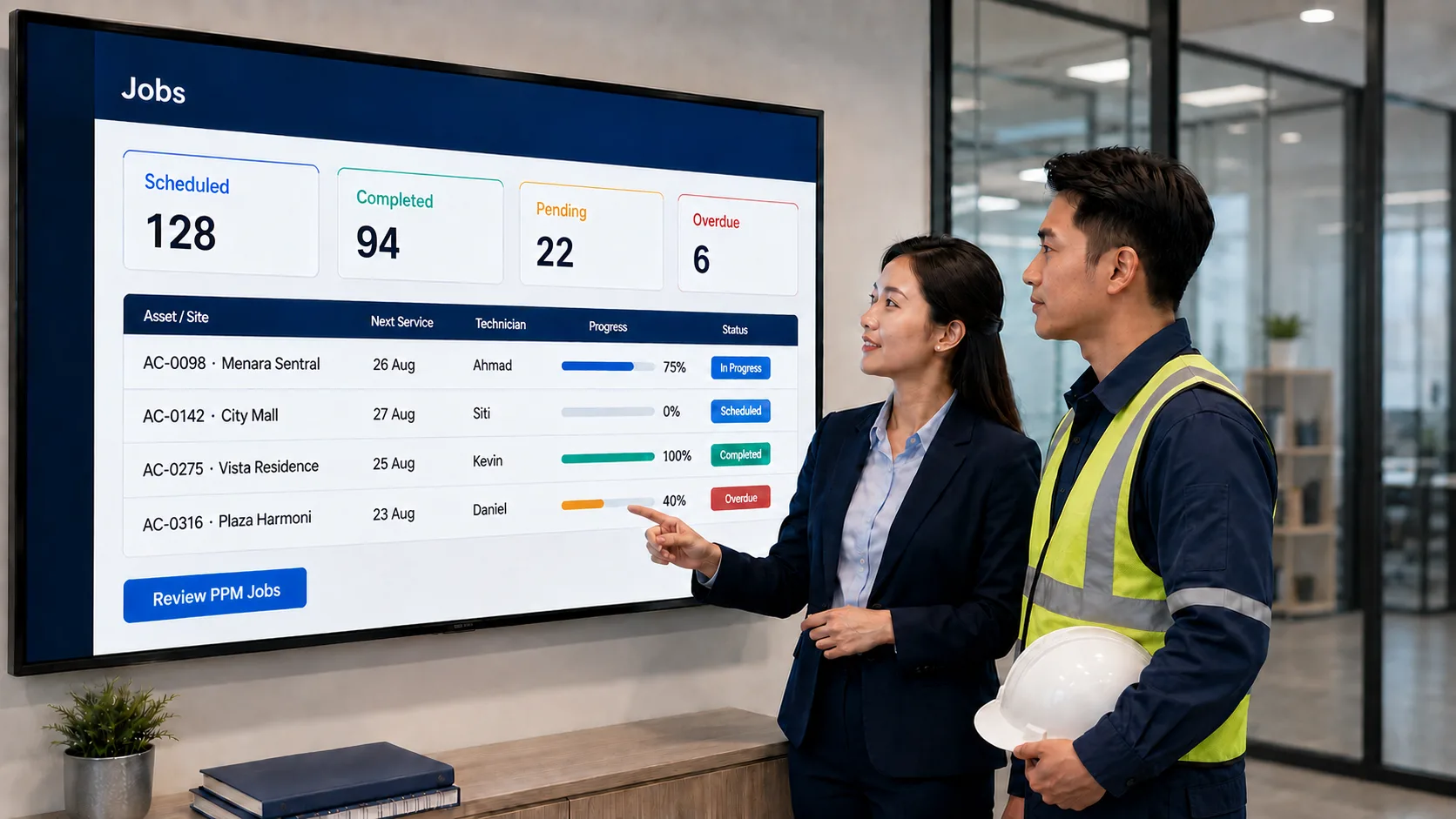
Create and manage recurring maintenance jobs while tracking their progress across every customer site.
Better visibility into scheduled, completed, pending and overdue maintenance — helping teams stay ahead of PPM workloads.
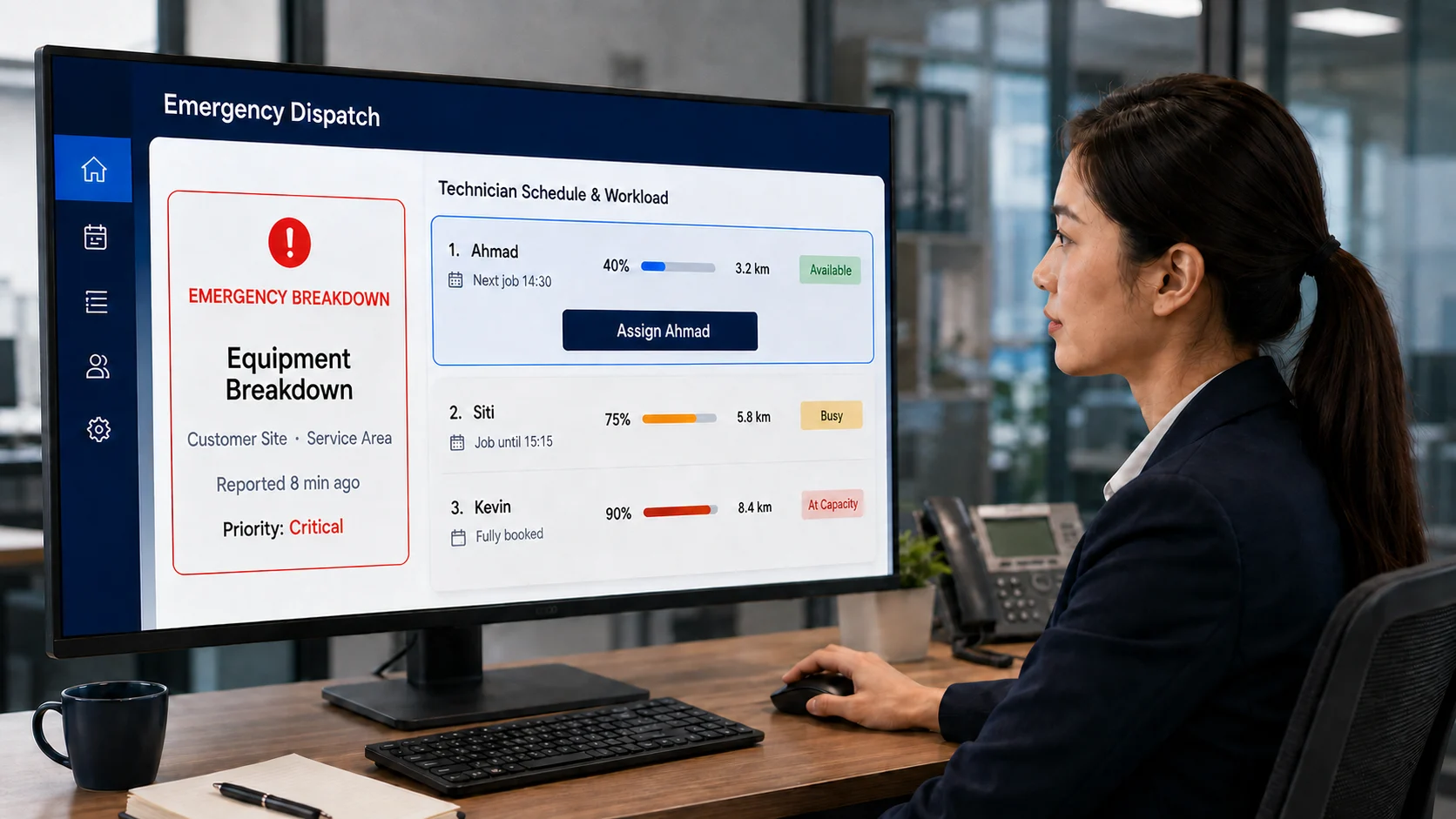
An emergency breakdown can disrupt the day’s entire schedule.
Give coordinators structured job information and visibility into technician workloads to support faster assignment and dispatch decisions.
Teams can respond to urgent jobs while maintaining visibility over the rest of the operation.
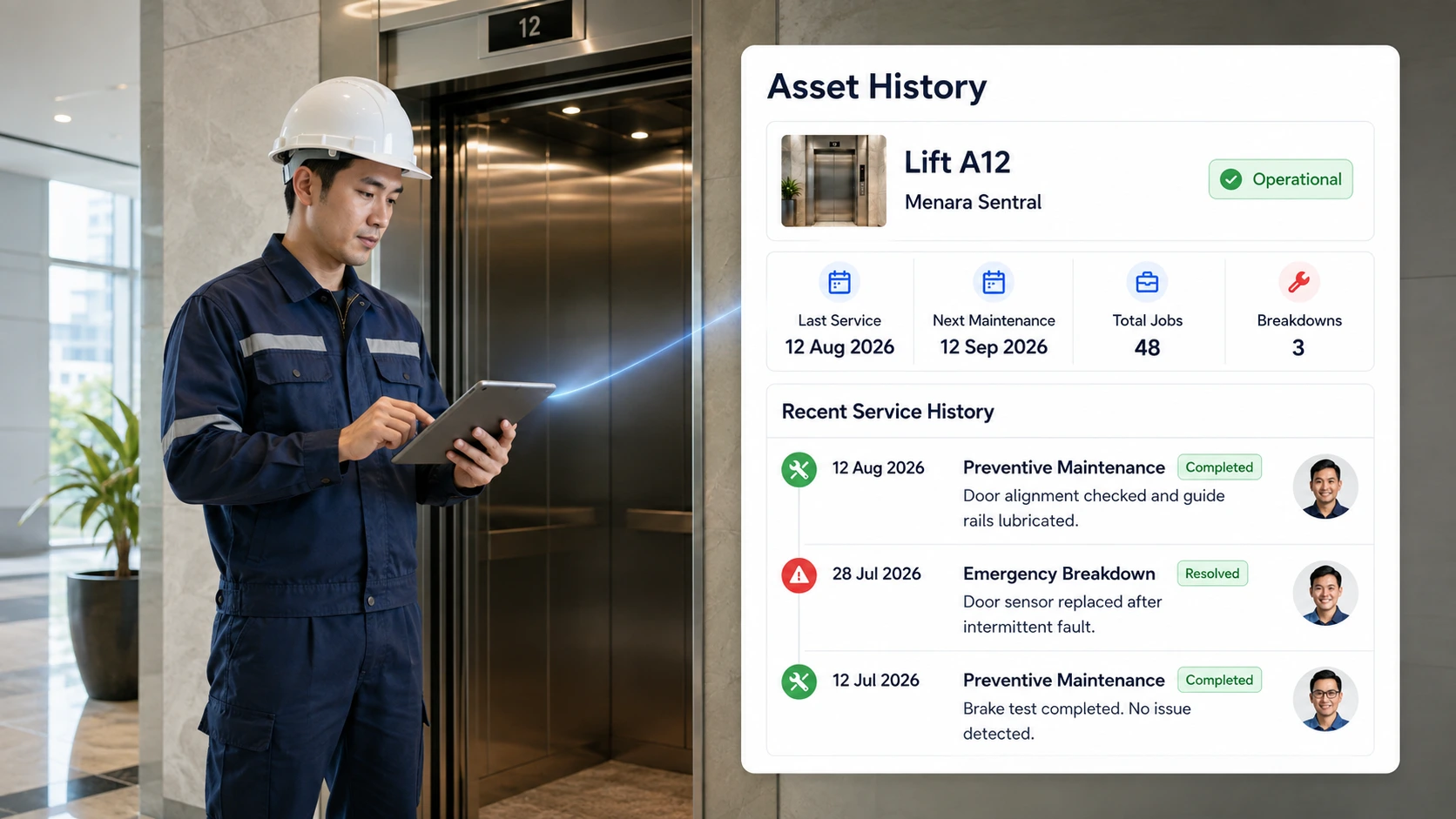
Service history is often scattered across paper reports, spreadsheets, files and employee knowledge.
Maintain centralised asset records containing relevant service and maintenance information for every elevator and escalator.
Technicians access better context before or during a job, supporting faster troubleshooting and more informed service decisions.
When technicians rely on different paper forms or individual working habits, service quality and documentation vary.
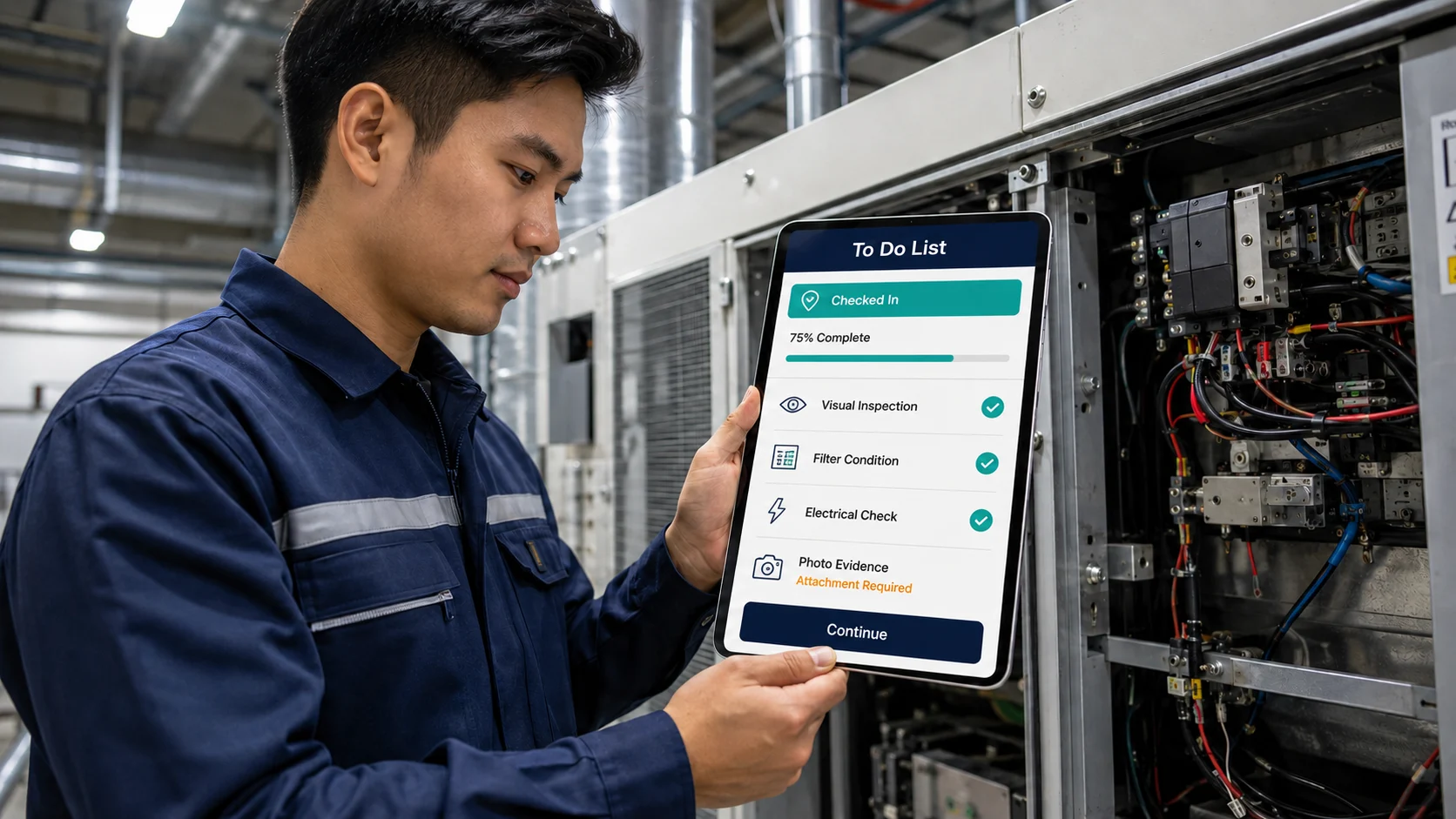
Use digital SOP checklists and structured workflows to standardise service processes. Technicians can:
More consistent service delivery, stronger accountability and better proof of work.
Paper job sheets create a delay between completing work on site and receiving documentation at the office.
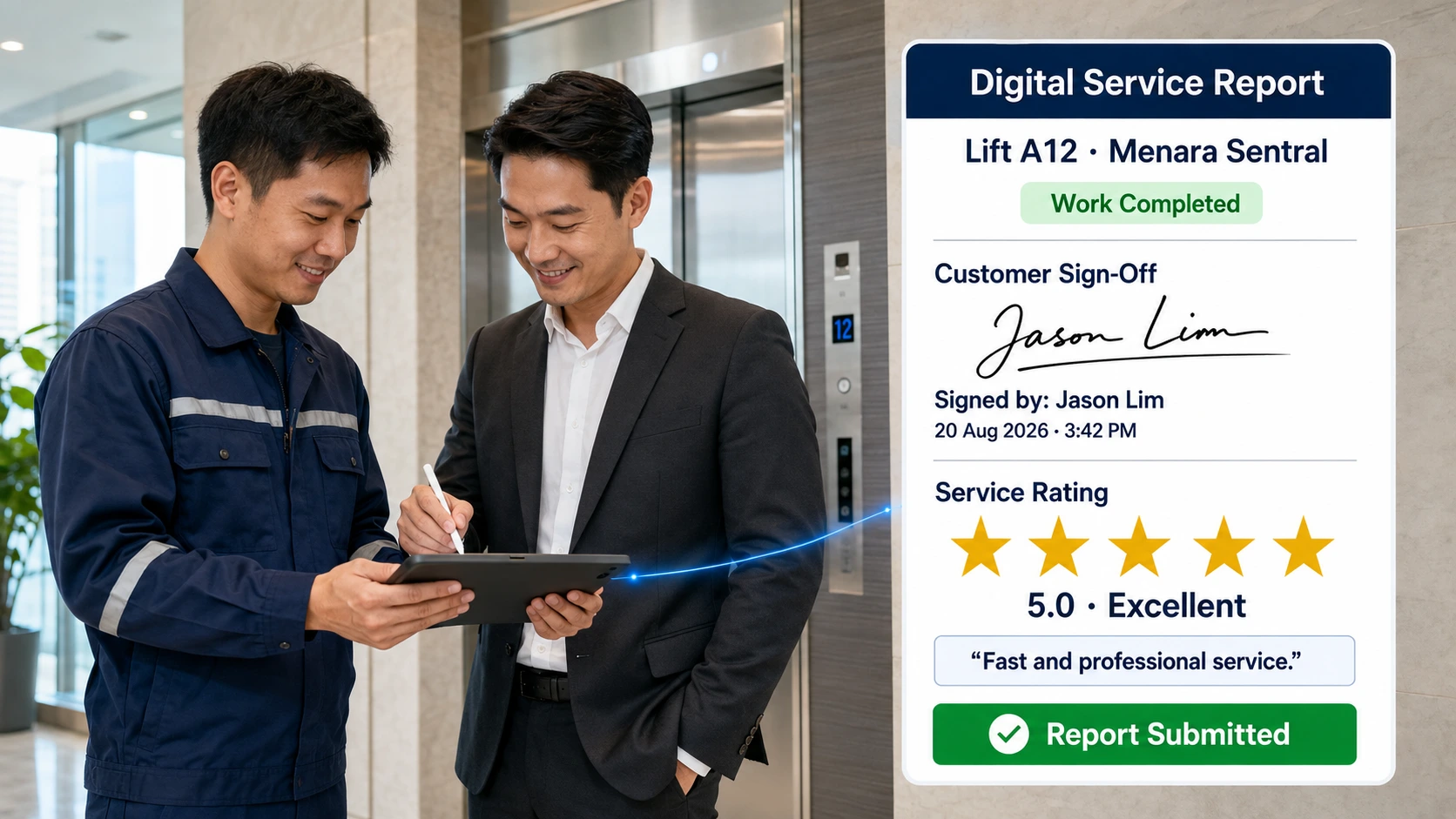
Technicians complete digital forms and service reports directly from the field. Customer sign-off can be captured digitally, including remote sign-off where the customer is not physically available.
Faster report turnaround and less administrative work for office teams.
Elevator and escalator operations involve more than maintenance and emergency response — inspection activities, documentation and certificate validity also need to be monitored.
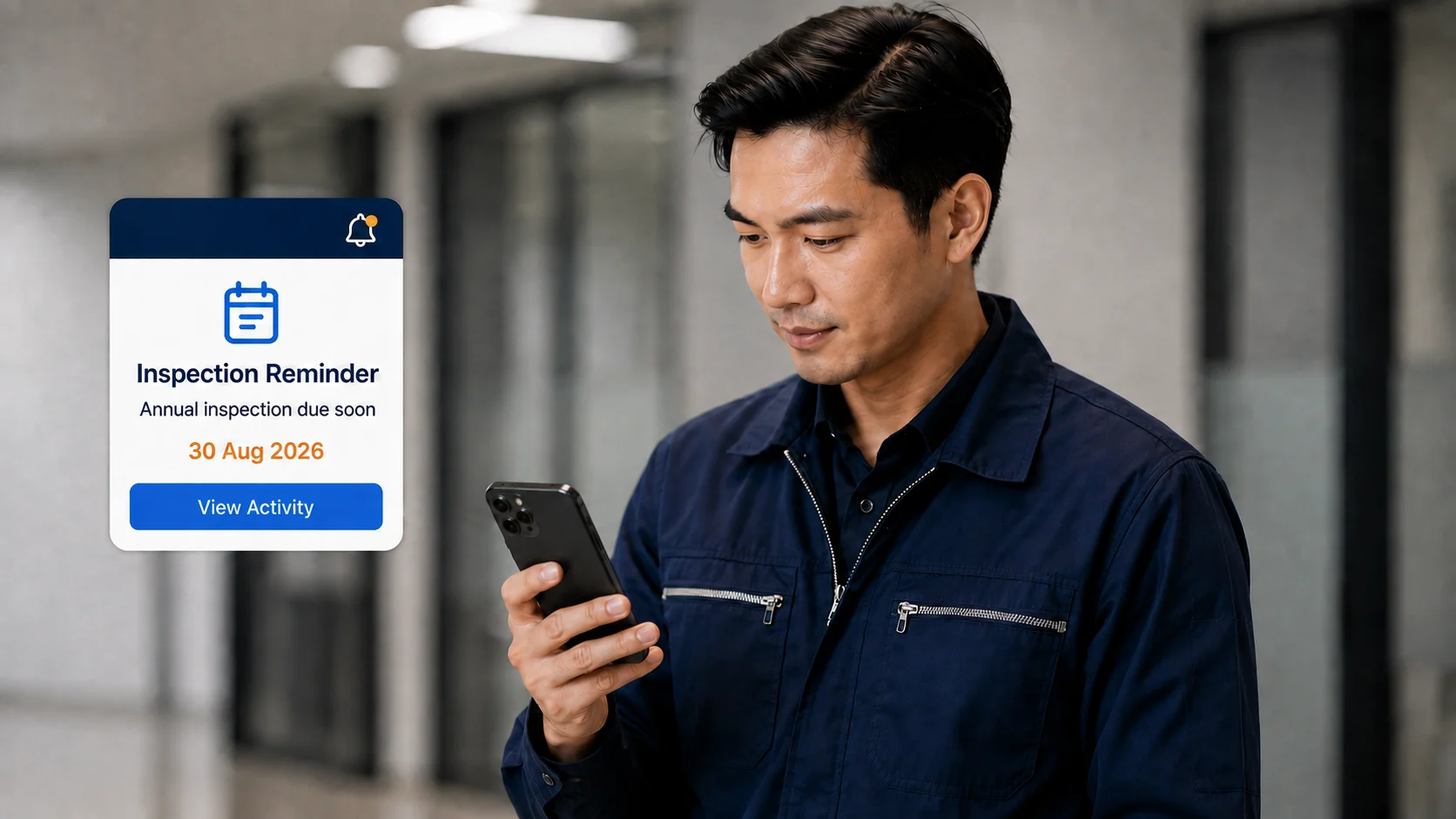
Organise inspection and certificate information alongside operational and asset records, making it easier to identify upcoming activities and items requiring attention.
Better operational visibility around inspection and compliance-related activities.
Traditional service software can tell you whether a job has been created, assigned or completed. But operational leaders need to answer bigger questions.
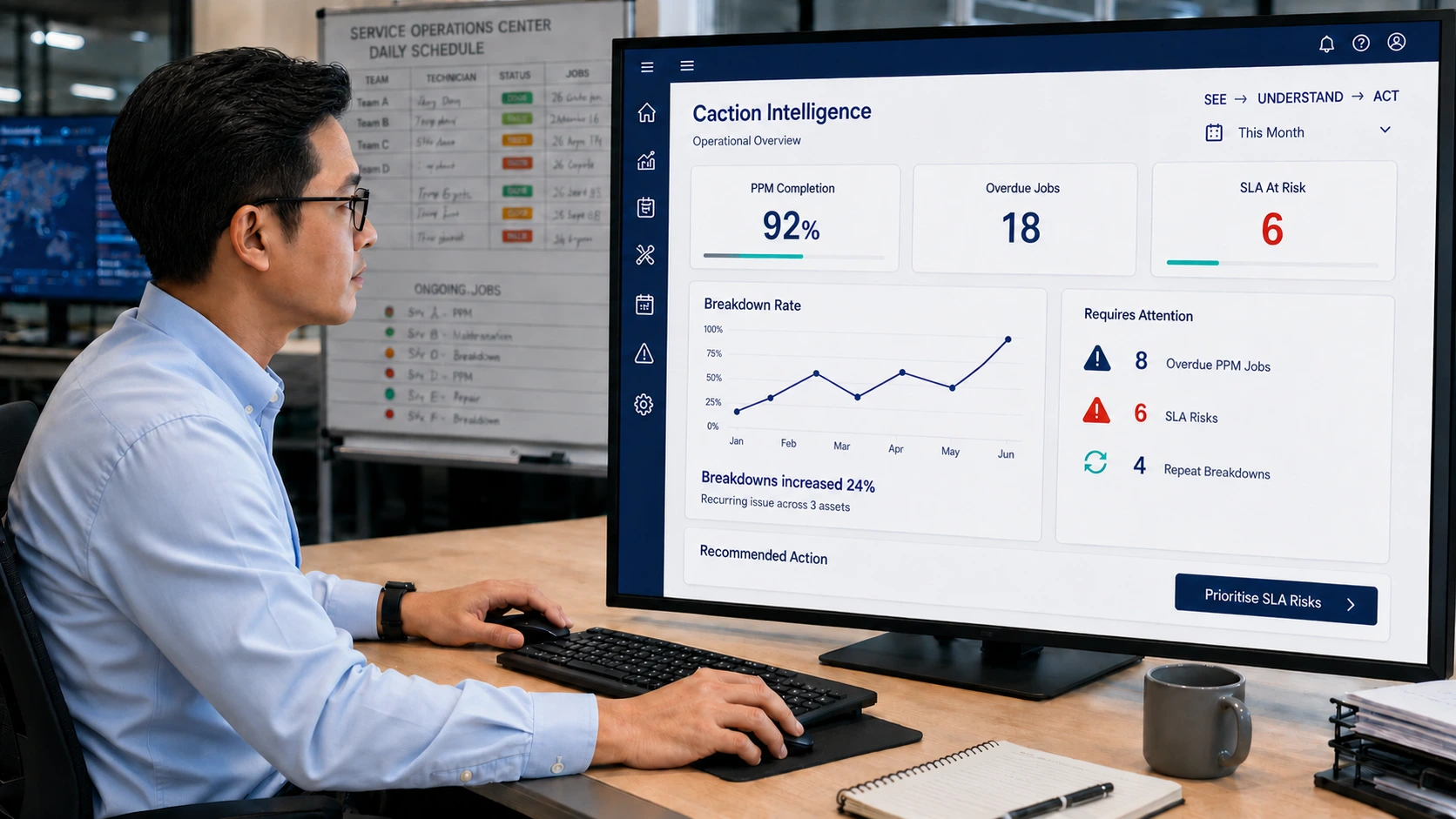
This is where Caction Intelligence (CI) adds another layer of value — turning operational data into visibility across the business, so leaders can understand performance and identify the areas that require attention.
| See | Understand | Act |
|---|---|---|
| Breakdown trends | Where recurring problems occur | Improve maintenance planning |
| Technician workload | Where capacity is constrained | Reallocate resources |
| Overdue jobs | Where work is falling behind | Take corrective action |
| PPM completion | Where maintenance performance is weak | Improve scheduling |
| Asset service history | Which equipment needs attention | Make better service decisions |
| Response performance | Where SLAs may be at risk | Improve dispatch |
| Service performance | Where teams are performing differently | Identify improvement opportunities |
See What Changes When Your Entire Operation Runs From One Source of Truth
As elevator and escalator companies grow, manual processes become harder to sustain. Caction helps connect the people, assets, jobs and information involved in daily service operations.
| Operational Area | Before Caction | With Caction |
|---|---|---|
| Installation & Commissioning | Records are scattered across documents and files | Asset, installation and commissioning records are centralised |
| Inspection & Defects | Findings and defects are difficult to trace or follow up | Findings, defects, photos and corrective actions are linked to the asset |
| Maintenance | PPM schedules and service history rely on spreadsheets, paper or technician knowledge | Maintenance activity and complete service history are easier to monitor |
| Breakdowns & Callbacks | Requests come through calls and WhatsApp, making follow-up difficult | Jobs are created, assigned and tracked digitally |
| Technician Productivity | Technicians may lack context or have uneven workloads | Teams can see technician activity, workloads and relevant asset history |
| Service Reporting | Reports, photos and customer sign-offs are scattered across different channels | Service proof is captured digitally with timestamps, photos, notes and sign-off |
| Certification & Compliance | Certificate dates and inspection requirements are tracked manually | Certificate information, inspections and follow-ups are organised by asset |
| Operational Visibility | Managers need to chase different people for updates | Leaders have a shared view of jobs, assets, technicians and performance |
| Problem Assets | Recurring breakdowns and problematic assets are difficult to identify | Caction Intelligence highlights breakdown trends, recurring issues and assets requiring attention |
| Decision-Making | Operational decisions rely heavily on manual updates and fragmented information | Leaders have clearer operational data to identify issues, prioritise action and improve performance |
Measure the Things That Actually Affect Your Business
The goal of digitalisation isn’t simply to replace paper. It’s to make important operational information easier to see, understand and act on.
Preventive Maintenance
Know which maintenance jobs are scheduled, completed, pending or overdue — and maintain consistency across a growing asset portfolio.
Breakdown Response
Understand emergency workload and response performance, so coordinators can make dispatch decisions when urgent calls disrupt planned work.
Technician Productivity
See workloads and field activity clearly, identify overloaded teams and underutilised capacity, and plan resources better.
Repeat Visits
Use asset and service history to understand recurring issues, so teams make informed decisions and reduce unnecessary repeat visits.
Service Report Turnaround
Capture service information closer to the point of work and reduce dependence on paper forms to complete documentation faster.
Customer Experience
Keep customers informed with better service visibility, so teams can provide timely and accurate communication.