Join our Zoom event in partnership with Microsoft & receive up to RM10,000 in Caction and Microsoft Power BI usage credits. T&Cs apply.
Case Study
Good response by the team members on queries
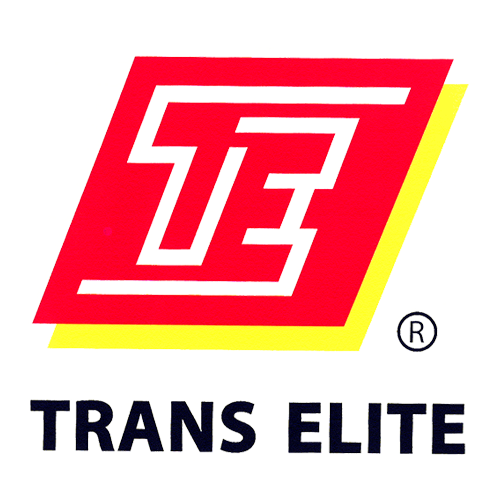
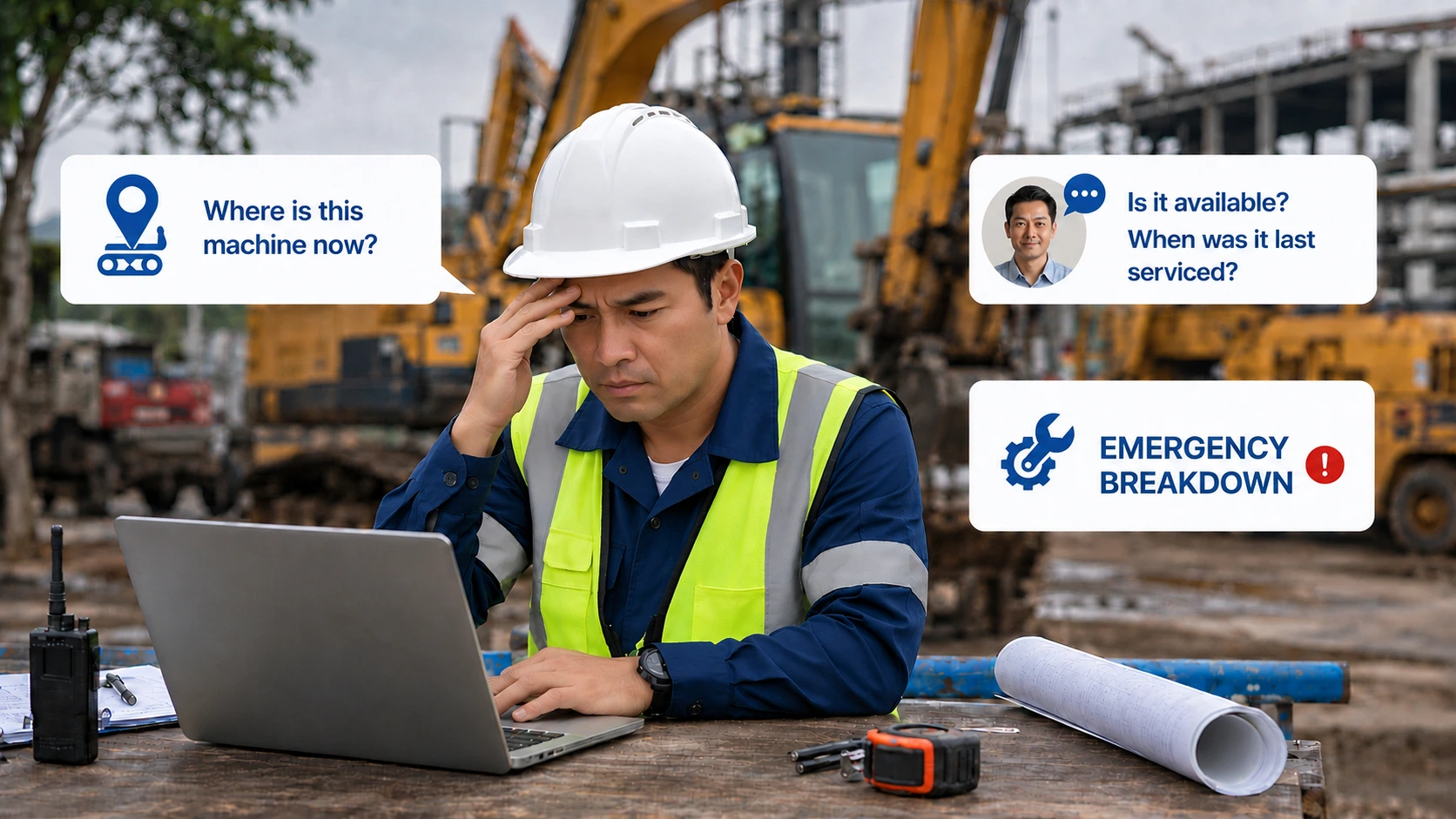
Equipment rental companies don't just manage jobs — they manage expensive assets that need to stay available, reliable and ready for the next customer. But machines operating in harsh construction environments face heavy workloads, dirt and rough handling that accelerate wear and tear. As breakdowns increase, so do repair and service costs. When maintenance is outsourced, companies may also struggle to verify whether work was properly completed or understand what is causing recurring failures.
By bringing rental, asset, service and technician activities into one operational system, companies gain a clearer view of where equipment is, what work has been performed, which servicing is due and what technicians actually did on site. Standardised SOPs and service records create greater accountability, while asset histories make recurring problems easier to identify.
From relying on WhatsApp, Excel and paper service forms to having a centralised operational record for equipment, maintenance and field work — giving managers greater control over asset uptime, service execution and equipment history.
| Operational Metric | Before Caction | With Caction |
|---|---|---|
| Communication | WhatsApp, calls and scattered updates | Centralised communication and job updates |
| Asset Tracking | Excel and manual tracking of equipment | Centralised asset and location tracking |
| Service Records | Paper forms and manual submission | Digital service records and history |
| Breakdown Management | Limited history of recurring breakdowns | Complete asset and breakdown history |
| Job Visibility | Managers manually chased technicians for updates | Real-time visibility into job progress |
| Service Consistency | Technicians relied on manual forms and processes | Standardised SOPs guide service execution |
| Accountability | Limited visibility into when work was performed | Timestamps, check-ins and audit trails |
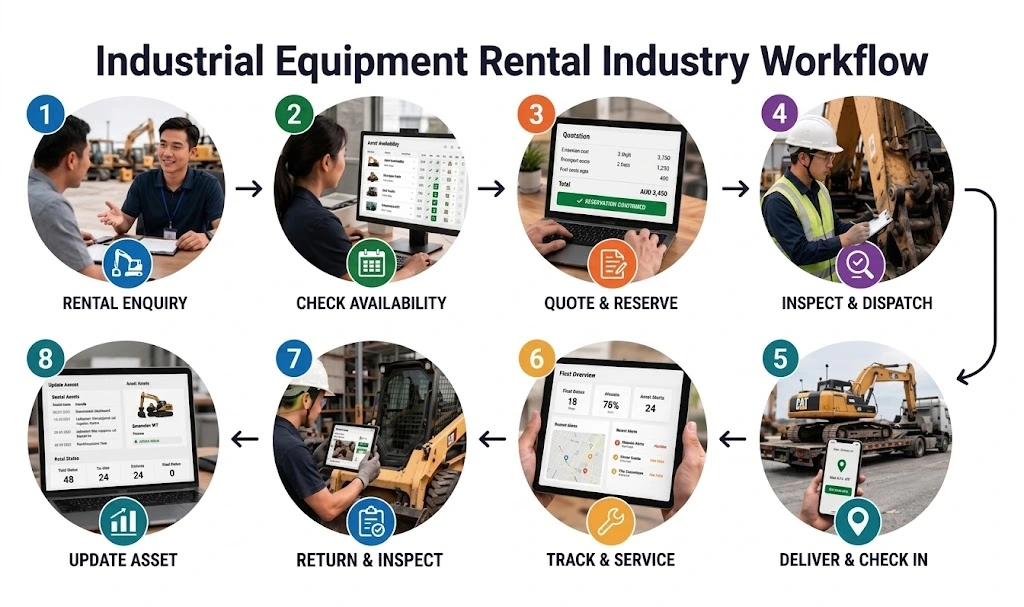
Based on our experience working with industrial equipment rental companies, here's what a typical operation looks like:
| Area | Typical Industry Profile |
|---|---|
| Business Model | Small to medium-sized companies that rent equipment to customers and may also provide maintenance, repair, installation or operator services. In some cases, customers may eventually purchase the equipment while continuing with a service contract. |
| Typical Customers | Customers can range from offices to factories and plants, depending on the type of equipment being rented. |
| Daily Operations | A typical process starts with a customer enquiry and sales discussion, followed by equipment preparation, delivery, installation and on-site service where required. Long-term rentals may also involve recurring maintenance and repair. |
| Assets Managed | Industrial and commercial equipment owned by the rental company and deployed across different customer sites. Assets may move through preparation, delivery, installation, rental, maintenance, collection, return and redeployment, with some eventually being purchased by customers and remaining under a service contract. |
| Field Workforce | Typically 10–50 technicians, supported by operational staff such as delivery personnel who transport and collect equipment. Technicians may be responsible for equipment preparation, installation, maintenance, repair and on-site service depending on the rental model. |
| Operational Priorities | Maintaining visibility over where equipment is located, who is responsible for it, what condition it is in and what work has been performed. Operations teams also need to coordinate equipment deployment, technician schedules, recurring maintenance and future rental requirements while keeping service and asset histories accessible. |
| Unique Needs | Unlike conventional field service companies, rental businesses manage assets they own and repeatedly redeploy across customers and locations. They therefore need connected visibility across asset location, rental history, service records, technician activity and future deployment plans, while maintaining accountability for equipment condition and handling throughout the rental lifecycle. |
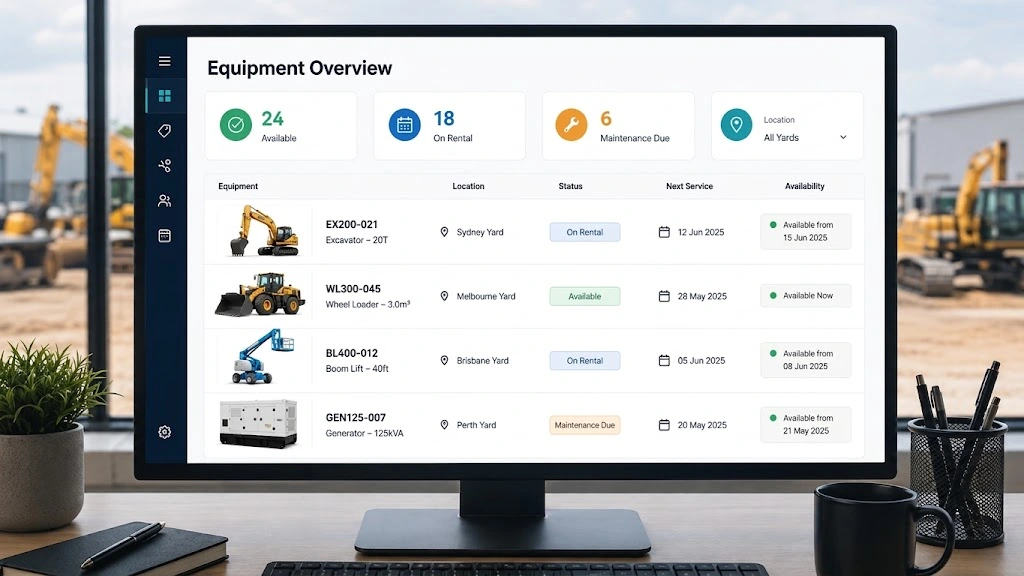
Caction brings asset information and service history into one system. Teams can access previous service records and the latest asset information without having to search through separate spreadsheets, paper records or conversations. This gives rental companies a more complete view of each asset throughout its rental and service lifecycle.
Managers get a direct view of jobs being attended by technicians and their latest status. Instead of calling individual technicians for updates, managers can access job information directly within the system. This makes schedules and field activity easier to monitor across the operation.
Caction allows technicians to follow clearly defined SOPs and update the required information as they complete their work. This gives technicians a structured process to follow rather than relying entirely on individual knowledge or informal instructions. It also makes service execution more consistent and the progress of work more visible to managers.
Caction creates an audit trail around key field activities and changes made within a job. Technicians can check in to a job within a defined radius of the location, while actions such as updating a job status are timestamped. This gives managers a clearer record of when activities occurred and how job information changed.
Caction systematically stores information so teams can access the latest job, asset and service information when they need it. Managers gain greater visibility without having to manually collect updates from different team members, while technicians can retrieve relevant information from the field. This reduces reliance on scattered communication channels and gives the business a stronger foundation for managing growth.
Equipment rental companies do more than rent out machines. They manage a constantly moving network of assets, customers, locations, technicians, rental commitments and service activities, all while remaining responsible for the equipment they own.
As the business grows, relying on WhatsApp, Excel and paper records makes it increasingly difficult to maintain a complete picture of what is happening. The challenge is not simply having more equipment to manage — it is maintaining visibility, accountability and control across the entire operation.
Caction helps bring these moving parts together by connecting asset information, jobs, technicians, locations and service history in one system. With clearer operational visibility and more structured workflows, rental companies can spend less time chasing information and more time managing the business.
For growing equipment rental companies, operational control starts with knowing where your assets are, what is happening to them and what needs to happen next.
“Some of the biggest challenges faced when adopting a system comes to convincing the team on why the system is helpful for them. It is easy to say “I want a system” and just think that it will run by itself successfully, but a true system solution requires experience to fine-tune the processes for the team so that it is best prepared for them. At Caction, we spend those times together with the key managers to ensure the success of the system by experience and trial and error before introducing it to the rest of the team.”
— Caction’s Consultant, QistiEquipment rental management software helps rental companies manage equipment, customers, rental activities, service jobs and asset information in a centralised system. For businesses that also provide maintenance and field services, it can connect rental operations with service management and asset history.
Rental companies own the equipment they deploy to customers, making asset visibility particularly important. Asset management helps companies maintain records of equipment, service history, locations and other information throughout the asset lifecycle.
Caction helps connect equipment, customers, jobs, technicians, locations and service history. Managers can gain visibility into job progress, while technicians can access structured SOPs and relevant asset information from the field.
Caction provides operational visibility around job and asset locations, including location-based technician check-ins. This helps rental companies maintain clearer records of where field activities are taking place and supports better planning of asset movements.
Caction creates an audit trail for field activities. Technicians can check in to jobs within a defined location radius, while changes such as job status are timestamped in the system.
Yes. Centralising service history allows teams to access information about previous work performed on equipment, helping them understand the asset’s history without relying on paper records or individual staff knowledge.
Yes. Caction is designed to support field service operations, making it suitable for rental businesses that have technicians involved in equipment preparation, installation, maintenance, repair or on-site service.
Start with the operational workflow rather than the software features. Identify how equipment moves through the business, where information is currently stored, what managers need visibility into and where communication or accountability gaps exist. Then configure the system around those requirements.
See how Caction can help your equipment rental business gain control over maintenance, asset usage and uptime.
Get Free Demo