Join our Zoom event in partnership with Microsoft & receive up to RM10,000 in Caction and Microsoft Power BI usage credits. T&Cs apply.
Managing medical equipment means keeping track of high-value assets, specialized engineers, PPM schedules, service records and renewal dates — often across spreadsheets, WhatsApp and emails.
Caction brings it all into one system, giving your team real-time visibility over assets, jobs, service history and upcoming maintenance.

 Mandarin Opto-Medic
 LabIVF
The app has helped us to better observe our staff’s job schedule and statuses. Besides that, different departments are now able to communicate more effectively for the arrangement of jobs. Getting assistance in tough jobs are made easier by being able to check the history effortlessly.
Caction has been a fantastic help in terms of monitoring the progress of our work. PICs have an easier time getting updates from their colleagues and accessing information from different jobs. Furthermore, it is also convenient to check on the job progress even if they are not on site.
Caction is used by medical device service organisations including Mandarin Opto-Medic Sdn Bhd and LabIVF Sdn Bhd, relying on Caction to coordinate engineer schedules, cross-department communication and job history.
Maintenance Completion
Stay ahead of scheduled maintenance
Breakdown & Service Response
Respond faster to urgent service requests
Asset & Service History
Keep every machine’s history accessible
Renewal & Compliance Tracking
Keep PPM, contract and expiry dates visible
Medical device service companies operate in an environment where equipment, people, documentation and timing all matter.
A typical service operation may involve:
Capture asset, deployment and handover details from day one.
Track PPM and calibration schedules before they fall overdue.
Manage breakdowns and repairs with full device context on hand.
Capture service findings, parts and evidence as work happens.
Keep renewal, contract and relocation details visible as devices age.
In general field service, the nearest available technician may often be suitable for a job. Medical device servicing can be different. Engineers may have specific experience, certifications or knowledge related to particular brands, models or equipment categories. That means job assignment may need to consider:
Caction helps coordinators match equipment, engineer capability, certification, location, availability and workload when assigning service jobs. Spend less time coordinating and get the right engineer to the right device faster.
Medical device service companies often manage recurring activities such as planned preventive maintenance, service contract renewals and device registration-related dates. Missing a date can create more than an administrative problem. It can lead to overdue maintenance, unhappy customers, delayed renewals and increased operational risk.
Caction helps teams track PPM, contract renewals, warranty expiry, calibration and follow-up activities across the equipment base with auto-reminders. Reduce missed dates, avoid overdue service and keep customer commitments on track.
A medical device breakdown can affect more than the equipment itself. Patient care, hospital operations and service commitments may all be impacted when a critical device is unavailable. When a breakdown occurs, teams need to quickly understand:
Caction connects device history, breakdowns, service records and job status in one place. Help teams respond faster, reduce downtime and get critical equipment back into service sooner.
For medical device service companies, completing the job is only part of the process. The company may also need to demonstrate:
Paper forms and generic reports make it easier for information to be missed or submitted late.
When reports are completed only after engineers return to the office, there can also be a delay between the physical service and the availability of a complete service record.
Caction helps engineers capture service details, findings, parts, timestamps, evidence and follow-up actions as part of the service workflow.
Get complete records faster, improve accountability and keep service information ready when needed.
Medical device service businesses manage PPM contracts, calibration schedules, service agreements and other renewal dates across multiple customers and devices. As the portfolio grows, relying on spreadsheets and individual reminders makes it harder to stay ahead of upcoming renewals.
Caction brings assets, service history, contracts and expiry dates into one connected view, helping teams identify upcoming renewals, follow up on time and maintain continuity of service. Instead of reacting to expiry dates at the last minute, teams can plan renewals earlier and keep more service opportunities moving forward.
In general field service, the nearest available technician may often be suitable for a job. Medical device servicing can be different. Engineers may have specific experience, certifications or knowledge related to particular brands, models or equipment categories. That means job assignment may need to consider:
Caction helps coordinators match equipment, engineer capability, certification, location, availability and workload when assigning service jobs. Spend less time coordinating and get the right engineer to the right device faster.
Medical device service companies often manage recurring activities such as planned preventive maintenance, service contract renewals and device registration-related dates. Missing a date can create more than an administrative problem. It can lead to overdue maintenance, unhappy customers, delayed renewals and increased operational risk.
Caction helps teams track PPM, contract renewals, warranty expiry, calibration and follow-up activities across the equipment base with auto-reminders. Reduce missed dates, avoid overdue service and keep customer commitments on track.
A medical device breakdown can affect more than the equipment itself. Patient care, hospital operations and service commitments may all be impacted when a critical device is unavailable. When a breakdown occurs, teams need to quickly understand:
Caction connects device history, breakdowns, service records and job status in one place. Help teams respond faster, reduce downtime and get critical equipment back into service sooner.
For medical device service companies, completing the job is only part of the process. The company may also need to demonstrate:
Paper forms and generic reports make it easier for information to be missed or submitted late.
When reports are completed only after engineers return to the office, there can also be a delay between the physical service and the availability of a complete service record.
Caction helps engineers capture service details, findings, parts, timestamps, evidence and follow-up actions as part of the service workflow.
Get complete records faster, improve accountability and keep service information ready when needed.
Medical device service businesses manage PPM contracts, calibration schedules, service agreements and other renewal dates across multiple customers and devices. As the portfolio grows, relying on spreadsheets and individual reminders makes it harder to stay ahead of upcoming renewals.
Caction brings assets, service history, contracts and expiry dates into one connected view, helping teams identify upcoming renewals, follow up on time and maintain continuity of service. Instead of reacting to expiry dates at the last minute, teams can plan renewals earlier and keep more service opportunities moving forward.
As the business grows, keeping track of operations manually becomes harder. The problem starts with the asset. Without a centralized asset history, teams may have to search through spreadsheets, folders, WhatsApp conversations or ask individual engineers for answers.
Caction gives your team a connected operational record across the device lifecycle.
Running a medical device service business means balancing scheduled PPM and calibration work with breakdowns, troubleshooting, installations and customer support across different types of equipment.
The coordinator has to decide:
The leaders need to know:
At the same time, Engineers, Application Specialists, support teams and parts teams need to work from the same equipment and customer information.
The challenge isn't simply completing service jobs. It's maintaining a reliable record of every device — what has happened to it, what is due next and what needs attention before it becomes a bigger service, compliance or customer issue.
Track Every Device, Service Job, Technician, Certificate and Service Record
Bring every medical device, service job, technician, certificate and service record into one connected view. Give your team the visibility to know what was serviced, what needs attention, what is expiring and what needs to happen next.
Asset information is often scattered across spreadsheets, documents and individual records.
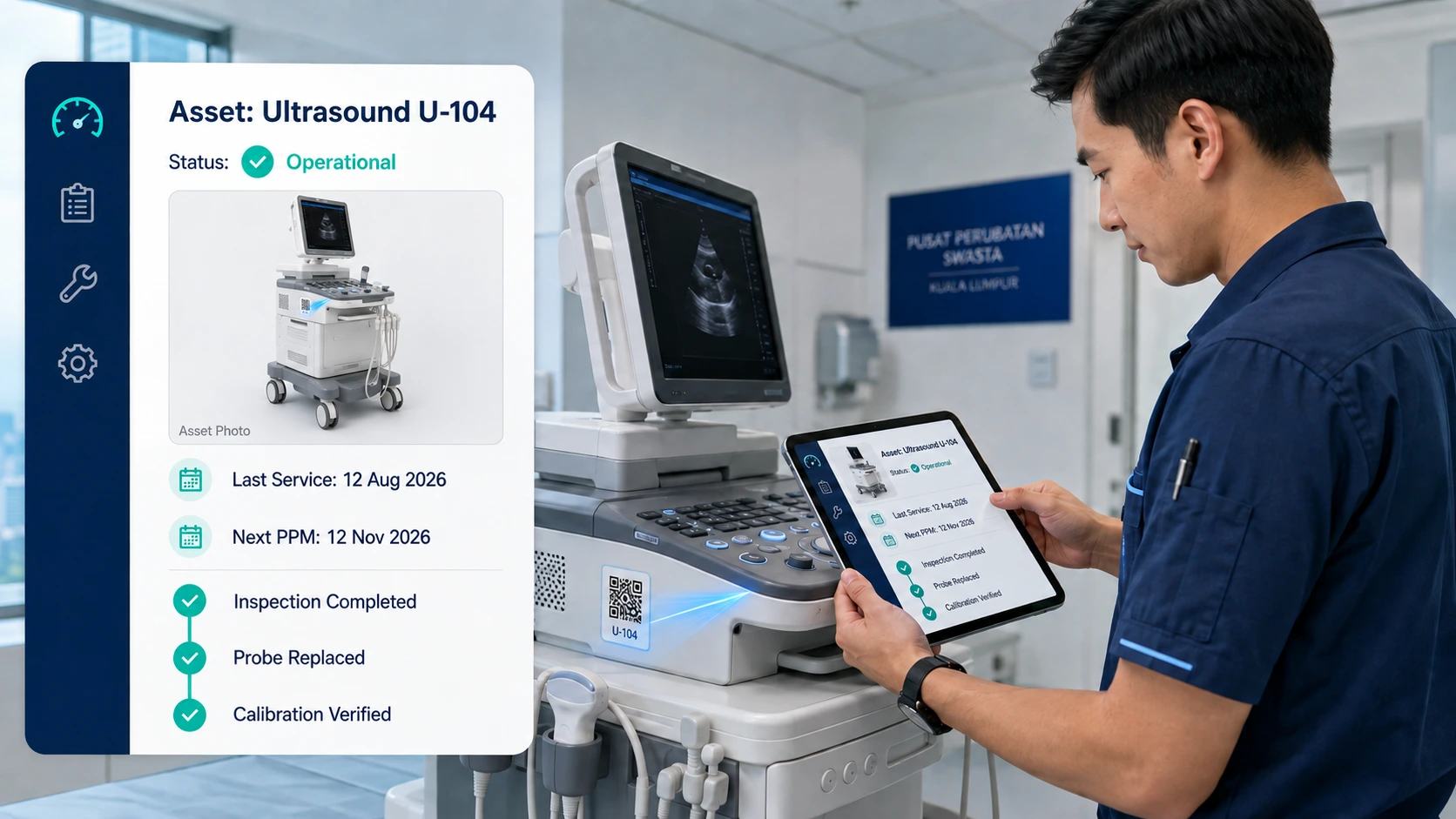
Create a centralized record for each medical device and connect it to its customer, location, jobs and service history.
Know the history of every machine without relying on individual memory. Teams can quickly understand:
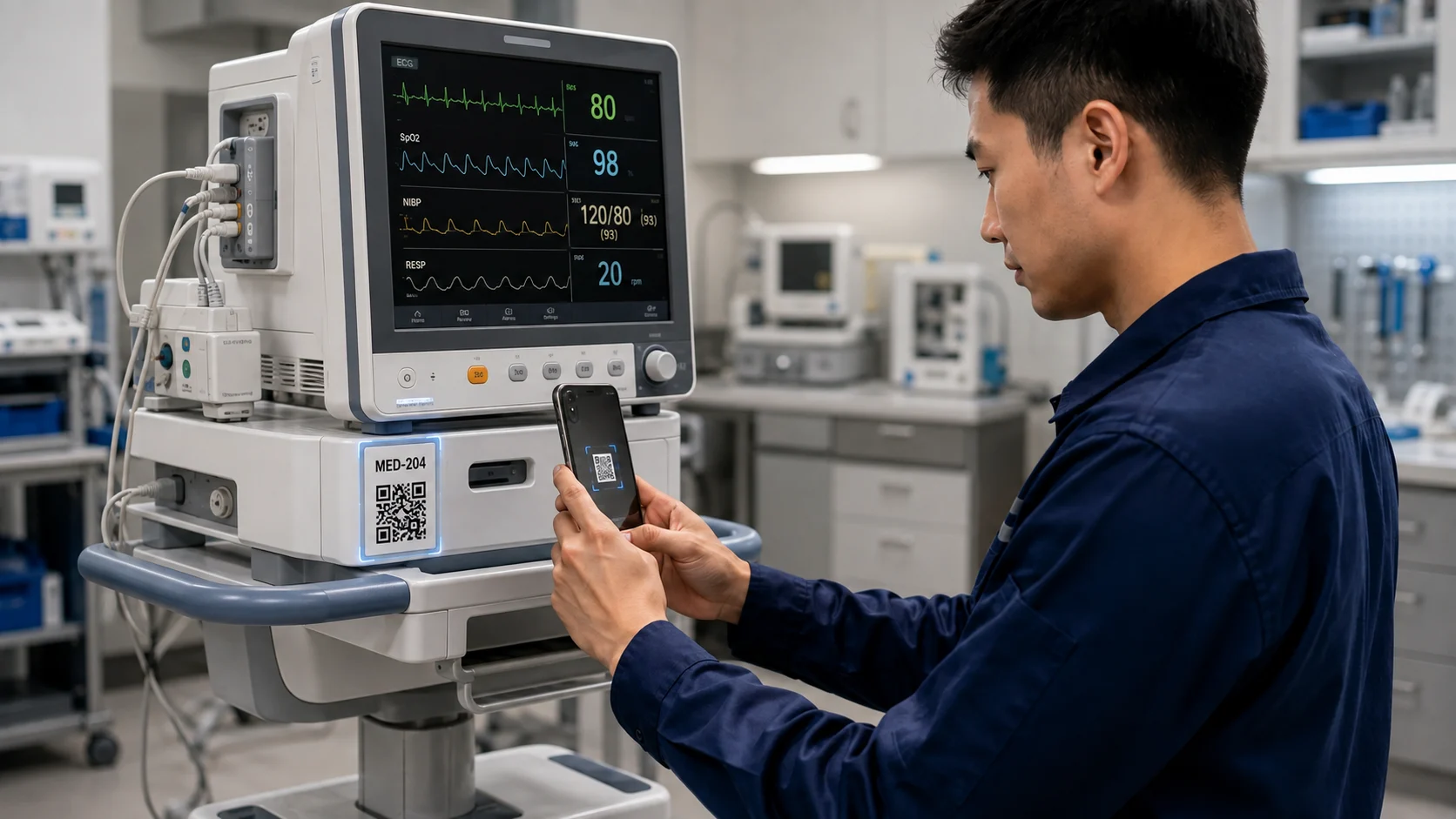
Engineers arriving at a site may need to search through records to identify the equipment and find its history.
Scan the QR code attached to an asset to quickly access its information and service history.
Give engineers the information they need at the point of service. Instead of starting every job with a blank slate, engineers can review relevant history before carrying out the work.
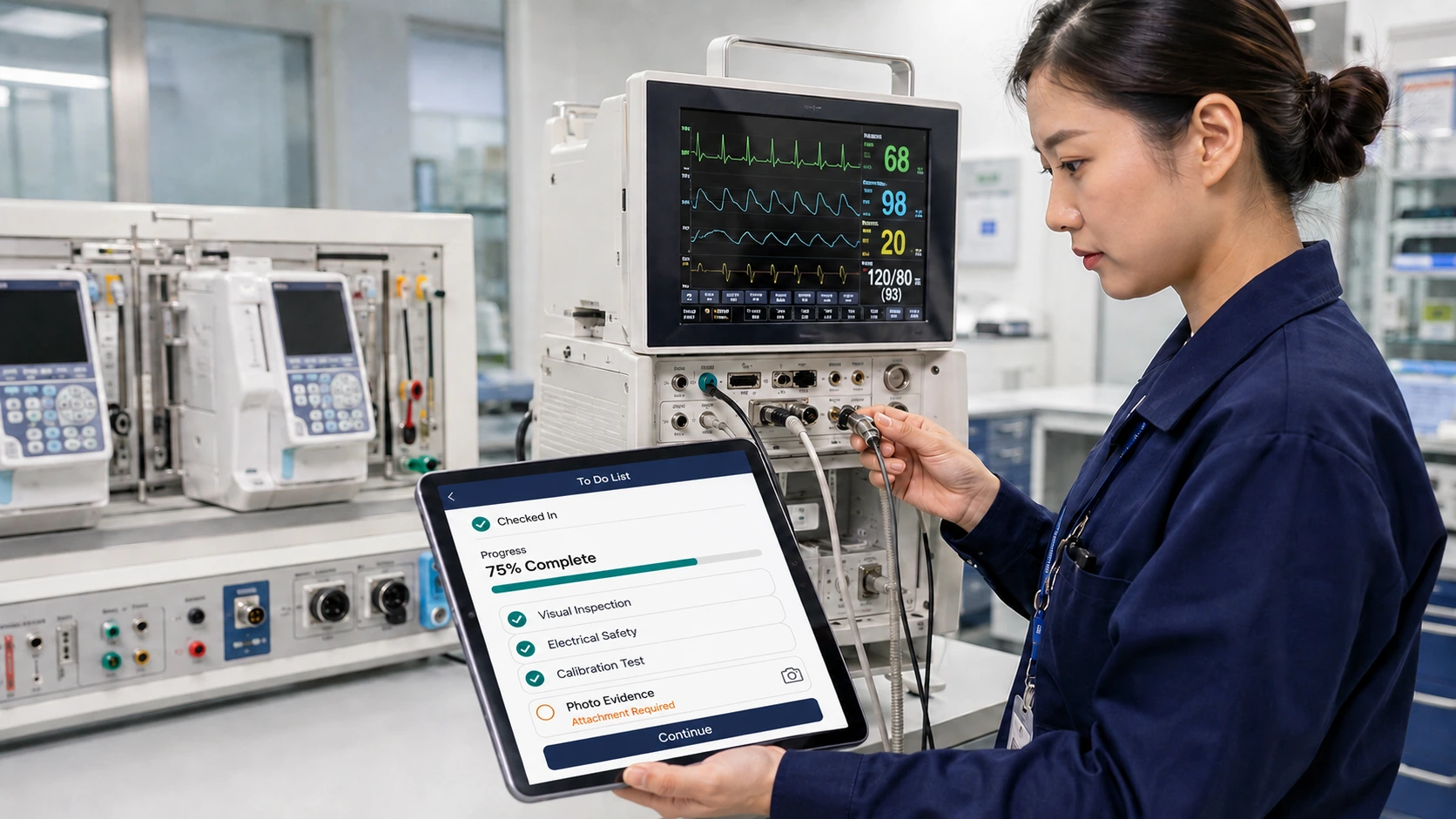
Different medical devices can have different inspection and maintenance requirements. Generic forms can result in inconsistent service documentation.
Create digital workflows and checklists based on your service requirements. Engineers can follow structured steps and capture required information directly from the field.
Standardize service quality without relying entirely on individual memory. This can help improve:
Engineers may complete paper forms in the field and submit reports later. This creates administrative work and delays visibility.
Engineers can complete digital service workflows on-site, including required information, photos and customer confirmation.
Get service information faster and reduce paperwork. The office does not have to wait for an engineer to return before the service record becomes available.
As the number of machines increases, manually tracking PPM dates becomes increasingly difficult.
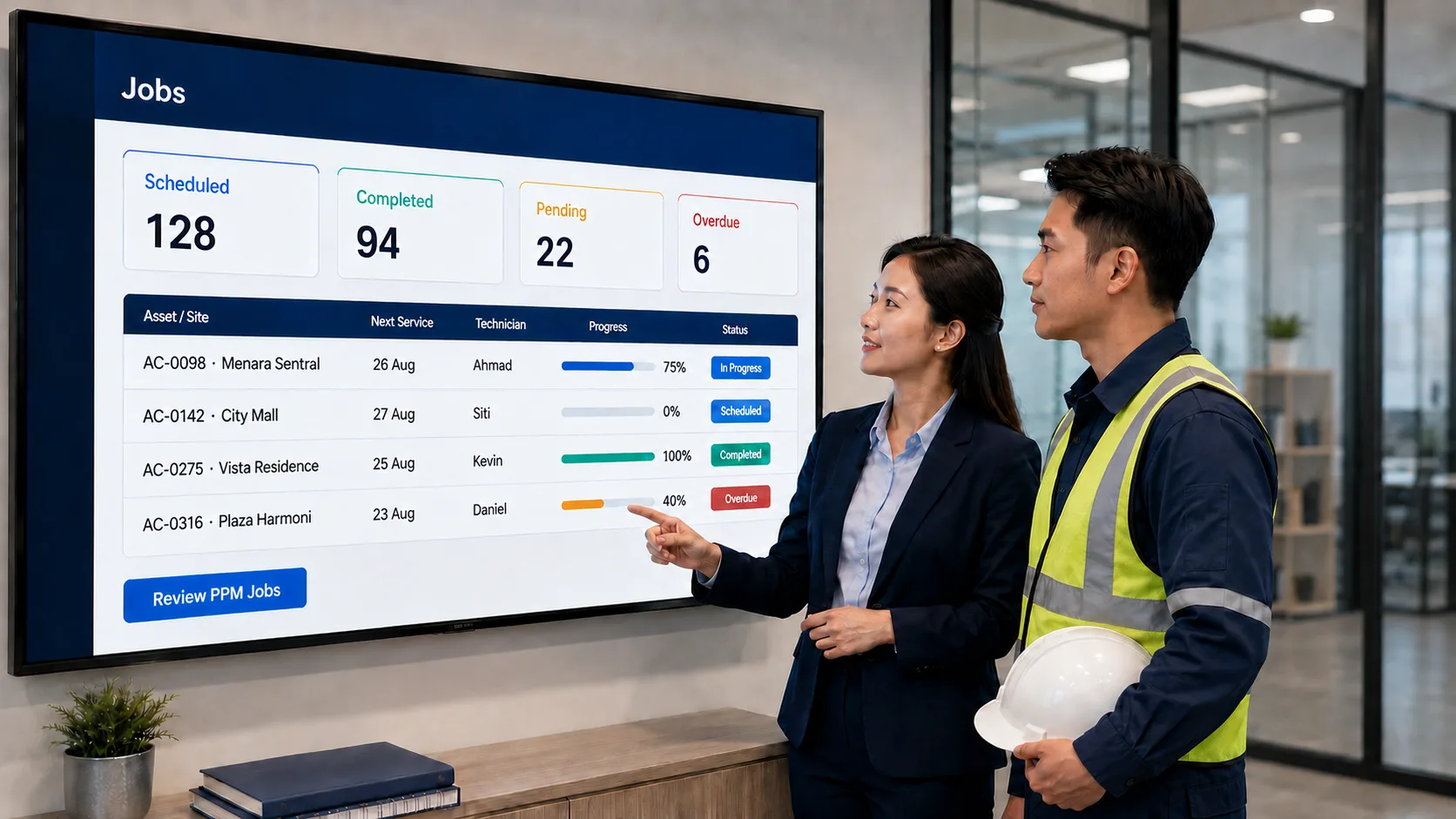
Set up recurring maintenance schedules and monitor upcoming or overdue jobs.
Stay ahead of maintenance instead of discovering overdue work after the fact. Operations teams gain greater visibility into:
Service businesses may need to monitor contracts, certificates, registrations and other equipment-related expiry dates.
Receive alerts for activities that require attention.
Reduce the risk of missed renewals and create more opportunities to act before an expiry date. This is particularly important for businesses where recurring service contracts and maintenance agreements contribute to ongoing revenue.
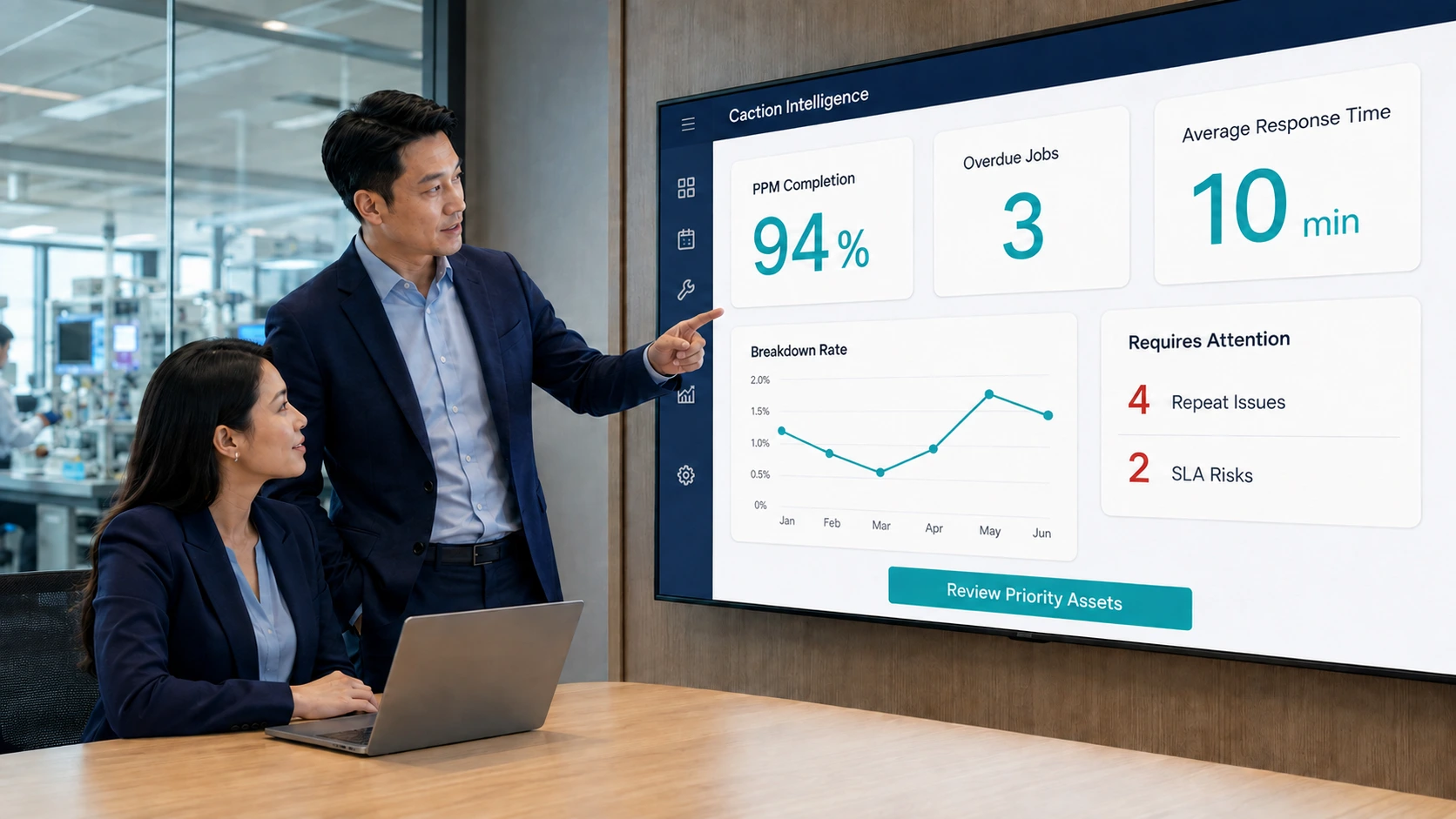
Medical device service operations need more than a system that shows whether a job is open, assigned or completed. Operational leaders also need to understand what is happening across devices, engineers, service contracts, certificates and recurring service issues.
This is where Caction Intelligence (CI) adds another layer of operational visibility — turning service data into practical insights, helping medical device service teams spot recurring issues, monitor performance, manage workload and identify what needs attention before it becomes a bigger operational problem.
| See | Understand | Act |
|---|---|---|
| Recurring device issues | Which equipment generates repeated service problems | Investigate root causes and improve maintenance |
| Engineer workload | Where capacity is stretched or underused | Balance assignments more effectively |
| Overdue service jobs | Where work is falling behind | Follow up and prioritise critical jobs |
| PPM & calibration completion | Which devices may be at risk of missed service commitments | Improve scheduling and follow-up |
| Certificate & renewal status | Which requirements are approaching expiry | Take action before deadlines are missed |
| Device service history | Which equipment requires more attention | Make better service and replacement decisions |
| Response & completion times | Where service performance may be slowing down | Improve resource allocation and workflows |
| Service trends | Where recurring patterns are emerging | Identify improvement opportunities |
See What Changes When Every Device, Job and Service Record Is Connected
As medical device service operations grow, keeping track of devices, engineers, service jobs, certificates, calibration records and customer history across spreadsheets, paper forms and messages becomes increasingly difficult. Caction connects these moving parts in one operational system, giving service teams a clearer view of what has happened, what is due and what needs attention.
| Before Caction | With Caction |
|---|---|
| Device information is spread across spreadsheets, documents and individual records | Each device has a centralised asset record with relevant service information |
| Engineers spend time searching for previous service information | Engineers can access relevant device and service history during the job |
| Service findings, photos and reports are recorded separately | Service findings, photos, notes and evidence are linked to the relevant device |
| PPM and calibration schedules are manually monitored | Recurring service activities are scheduled and tracked against each device |
| Certificates, contracts and renewal dates rely on spreadsheets or personal reminders | Expiry and renewal information is organised alongside device and service records |
| Breakdown requests come through calls, WhatsApp or email | Breakdown and service jobs are created, assigned and tracked digitally |
| Managers have limited visibility into overdue or outstanding work | Teams can see job status, overdue work and outstanding actions more clearly |
| Service reports are completed later, delaying information back to the office | Engineers capture required information and customer confirmation in the field |
| Service history depends on paper reports or individual engineer knowledge | A connected service history provides a consistent record of work performed |
| Recurring device problems are difficult to identify | Service history and operational data make recurring issues easier to identify |
| Managers rely on manual updates to understand engineer workload and performance | Managers have a shared view of jobs, devices, engineers and service performance |
| Renewal opportunities can be missed because information is fragmented | Service and expiry information helps teams identify what requires follow-up |
Measure the Things That Actually Affect Your Business
The goal of digitalisation isn’t simply to replace paper. It’s to make important operational information easier to see, understand and act on.
Asset & Equipment Visibility
Maintain a clear view of every device, including its location, customer, model, service status and complete history.
Service History & Traceability
Connect maintenance, repairs, breakdowns, parts and service reports to the relevant device for a complete record of service activity.
Preventive Maintenance Management
Track PPM and scheduled servicing across your installed base, with clear visibility into upcoming, completed and overdue work.
Device-Specific Service Workflows
Give engineers the appropriate SOPs, checklists and service procedures based on the equipment they are servicing.
Field Service Reporting
Capture findings, readings, photos, parts used and customer confirmation on-site for faster and more complete service documentation.
Renewal & Expiry Management
Monitor service contracts, warranties, calibration-related dates, registrations and other renewal requirements before they become overdue.
Parts & Repair Management
Track parts used across devices and service jobs to identify recurring requirements and make better inventory decisions.
Service Accountability
Maintain a clear record of who performed each service, when it was completed, what was found and what action was taken.
Operational Intelligence
Use Caction Intelligence to identify recurring equipment issues, overdue work, repair trends, engineer workload and service performance.