Join our Zoom event in partnership with Microsoft & receive up to RM10,000 in Caction and Microsoft Power BI usage credits. T&Cs apply.
Case Study
Caction has been a fantastic help in terms of monitoring the progress of our work. PICs have an easier time getting updates from their colleagues and accessing information from different jobs. Furthermore, it is also convenient to check on the job progress even if they are not on site
The app has helped us to better observe our staff’s job schedule and statuses. Besides that, different departments are now able to communicate more effectively for the arrangement of jobs. Getting assistance in tough jobs are made easier by being able to check the history effortlessly
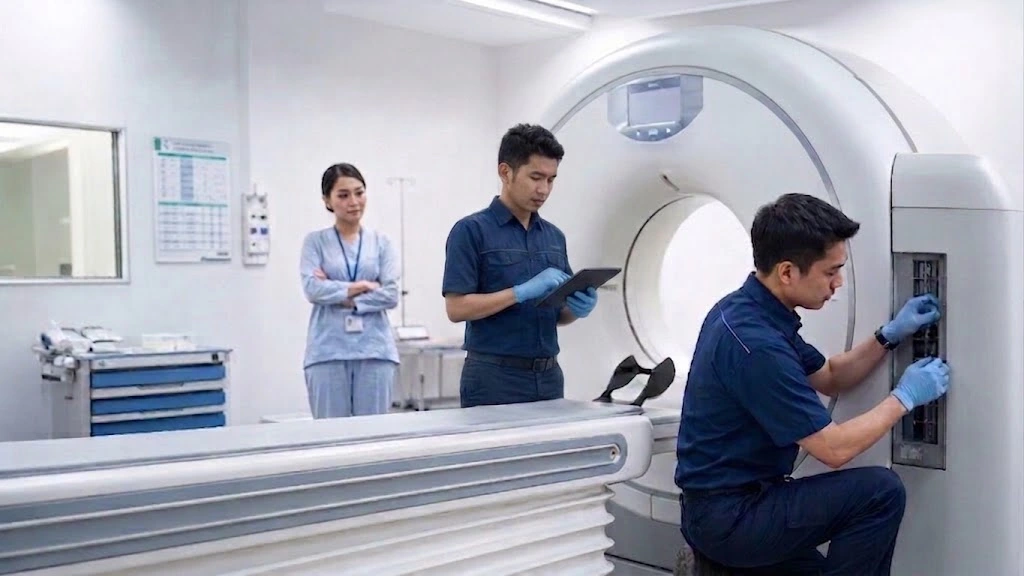
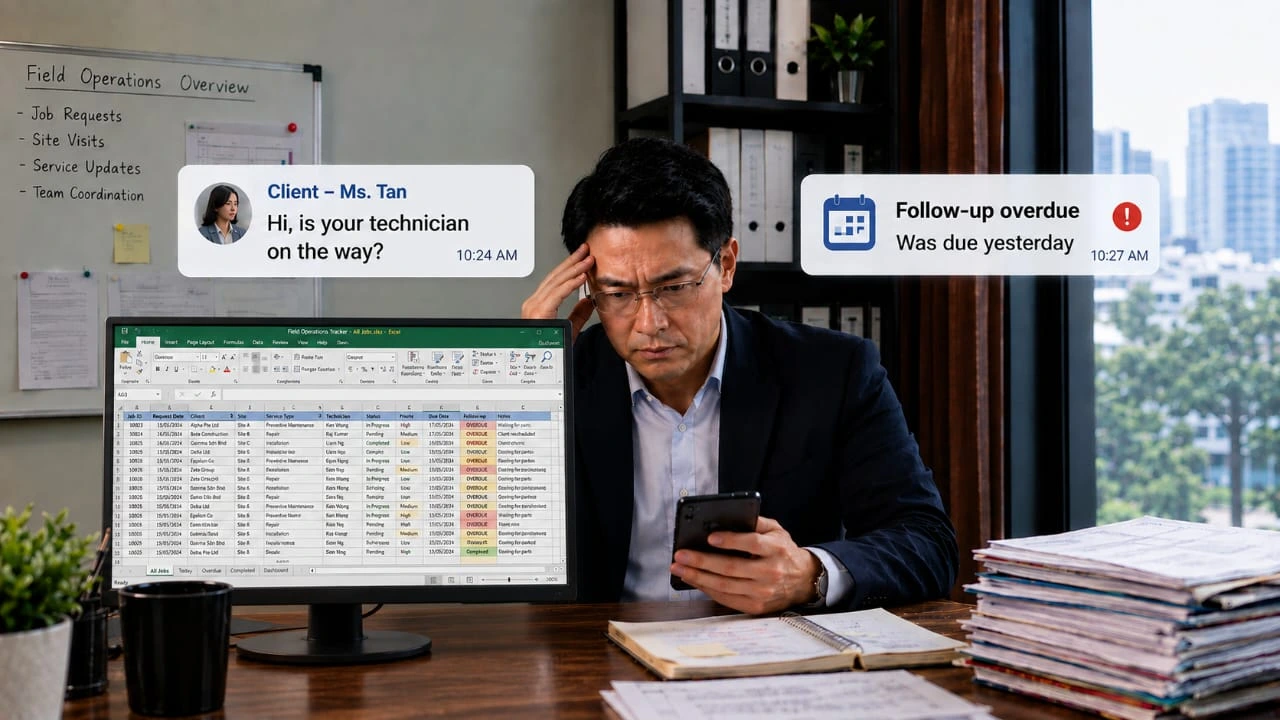
Managing complex service operations across high-value sensitive medical equipment where reliability, traceability and compliance are critical. As equipment portfolios expanded, companies struggled with fragmented asset information, manual maintenance tracking, contract renewal management, delayed reporting and increasing difficulty coordinating specialised engineers while ensuring service records remained audit-ready for hospital accreditation, health ministry and ISO requirements.
Partnered with Caction to create a connected operational platform that centralised equipment histories, standardised service workflows, and improved visibility across preventive maintenance, repairs, compliance records and field activities.
Medical device companies moved from fragmented, manually coordinated operations into a structured operating model with stronger asset control, improved compliance readiness and greater visibility across every service activity.
| Operational Metric | Before Caction | With Caction |
|---|---|---|
| Response Time | Manual request handling via calls, WhatsApp and emails & callback delays | Faster request acknowledgment via structured request tracking and job management |
| Equipment Management | Records scattered across Excel sheets, files and engineer knowledge | Centralised equipment lifecycle records |
| Service Quality | Reactive troubleshooting | Better first-time fix rates through model-specific guidance |
| Service Documentation | Manual forms and delayed report submission | Digital service reports completed from the field |
| Maintenance Tracking | Manual monitoring of PPM, calibration and renewal dates | Automated schedules, reminders and due date visibility |
| Engineer Coordination | Manual follow-ups between support teams and engineers | Centralised scheduling and job visibility |
| Operational Visibility | Dependent on manual updates from different teams | Real-time view of jobs, assets and overdue activities |
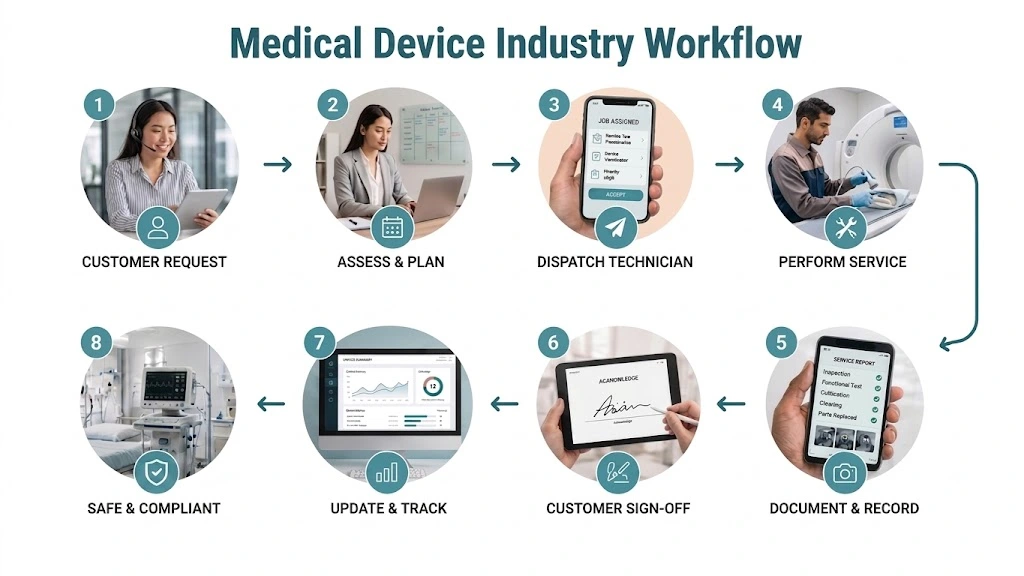
Based on our experience working with medical device service companies, here’s what a typical operation looks like:
| Area | Typical Industry Profile |
|---|---|
| Business Model | Provides installation, preventive maintenance, repairs, troubleshooting, relocation, validation, evaluation and training support for medical equipment. Renewal-driven business where PPM contracts, calibration certificates and device registrations require ongoing renewal management, making them a key driver of recurring revenue and compliance. |
| Typical Customers | Government hospitals, private hospitals, clinics, laboratories and healthcare institutions. |
| Daily Operations | Coordinating preventive maintenance schedules, responding to equipment issues, assigning specialised engineers, completing service documentation and ensuring equipment remains operational and compliant. |
| Assets Managed | High-value and sensitive medical equipment including diagnostic, imaging, laboratory and surgical devices, each requiring specific maintenance procedures and service histories. |
| Field Workforce | Technicians often require brand- or model-specific certifications (e.g., imaging, laboratory and surgical equipment), making it difficult to swap resources between jobs compared to general field service. |
| Operational Priorities | Maintaining equipment uptime, ensuring regulatory readiness, delivering accurate documentation and providing reliable support to healthcare providers. |
| Unique Needs | Medical device companies often serve a mix of government hospitals, private hospitals and clinics, each with different procurement processes and service expectations. Companies must balance long procurement cycles and compliance requirements with faster, more commercially driven customer needs. |
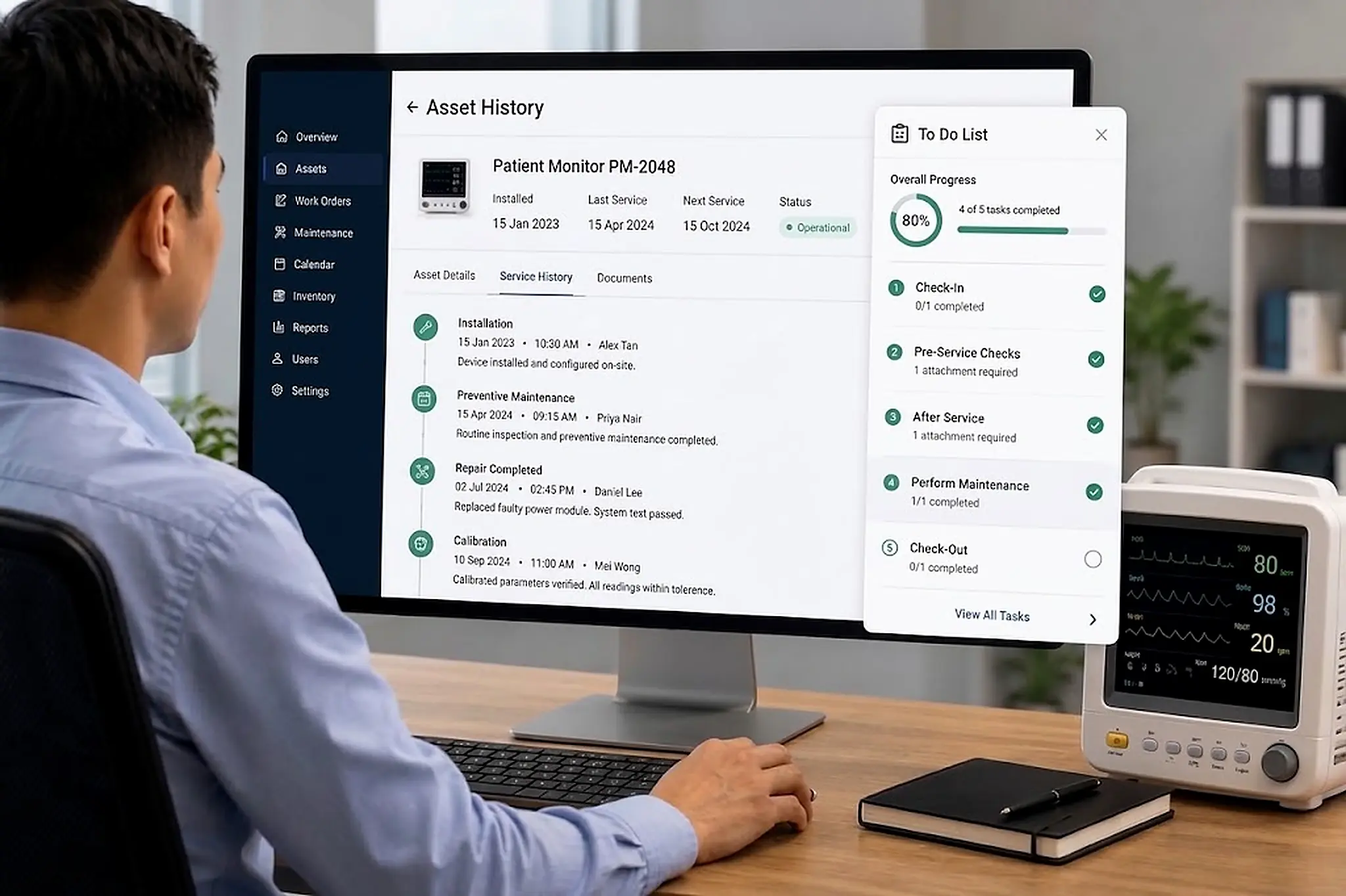
Centralised asset histories, service records and equipment information to help teams understand the full lifecycle of every device.
Customers first notice quicker responses as service requests are logged and tracked immediately instead of waiting for a callback.
Managers can assign jobs based on real-time technician availability and location with automated conflict check.
Digitised SOPs, checklists and service processes to improve consistency across engineers, equipment types and locations.
Enabled engineers to complete service reports directly from the field, reducing paperwork while improving documentation accuracy and traceability.
Reliable engineer performance and repair data help identify trends, improve resource planning and maintain service quality, which is vital for high-accuracy healthcare requirements.
Leaders can see asset history, job status, and overdue items in one place instead of chasing updates from different people.
“Customers are generally more satisfied and experience far less anxiety. While they still monitor operations, they no longer need to chase updates or rely on verbal communication—the data in front of them provides a clear and reliable view of the situation.”
— Caction’s Consultant, HafizahAs medical device companies grow, managing high-value equipment, compliance requirements and specialised service teams becomes increasingly complex. Companies that scale successfully are those that build a connected operational foundation that provides visibility, consistency and control.
Through partnering with Caction, medical device service companies can streamline complex operations, strengthen compliance readiness and deliver more reliable support across every stage of the equipment lifecycle.
Medical device companies manage high-value equipment with documentation and compliance requirements. They need more than job tracking — they need complete visibility into equipment history, maintenance activities and service records.
Caction provides a centralised view of equipment lifecycle information, including service history, maintenance activities and documentation, allowing teams to make faster and more informed decisions.
Caction helps companies create consistent, traceable service records through digital workflows, checklists, photos and service reports, making documentation easier to manage during audits and customer reviews.
Yes. Caction helps teams monitor and set reminders for preventive maintenance schedules, overdue activities and important renewal dates to reduce the risk of missed commitments.
Engineers can access equipment history before arriving on-site, complete service workflows digitally and submit reports immediately after completing work, reducing administrative delays.
Yes. Caction enables companies to standardise service processes while maintaining equipment-specific workflows and requirements.
Yes. Caction supports medical device companies as they expand their customers, equipment portfolios and service teams by providing the visibility and operational control needed to scale effectively.
See how Caction can help your medical device service business scale with greater visibility and control.
Get Free Demo